Your kitchen should support you every day, not slow you down. When you stock it with the right daily essentials, you cook faster, waste less food, and keep your space clean and safe. Kitchen daily essentials include basic tools, reliable cookware, key small appliances, simple utensils, food storage containers, cleaning supplies, and core pantry staples you use every day.
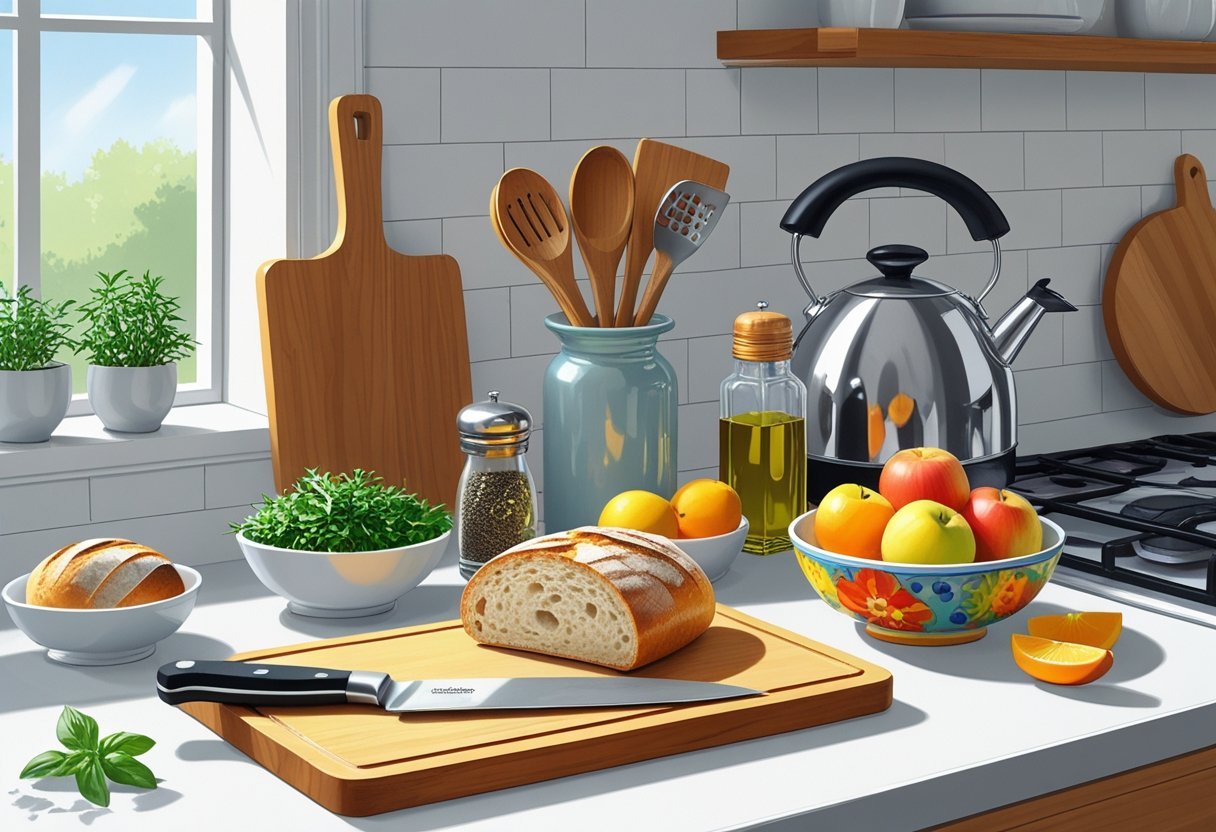
You rely on sharp knives, sturdy pans, and a few trusted appliances to handle most meals. You also need smart storage, basic bakeware, and simple cleaning tools to keep your kitchen organized and ready for the next task.
When you focus on practical, everyday items instead of extra gadgets, you build a kitchen that works well and feels easy to manage. The sections ahead break down what you truly need for daily cooking, storage, cleaning, and simple meal prep at home.
Essential Kitchen Tools for Daily Cooking
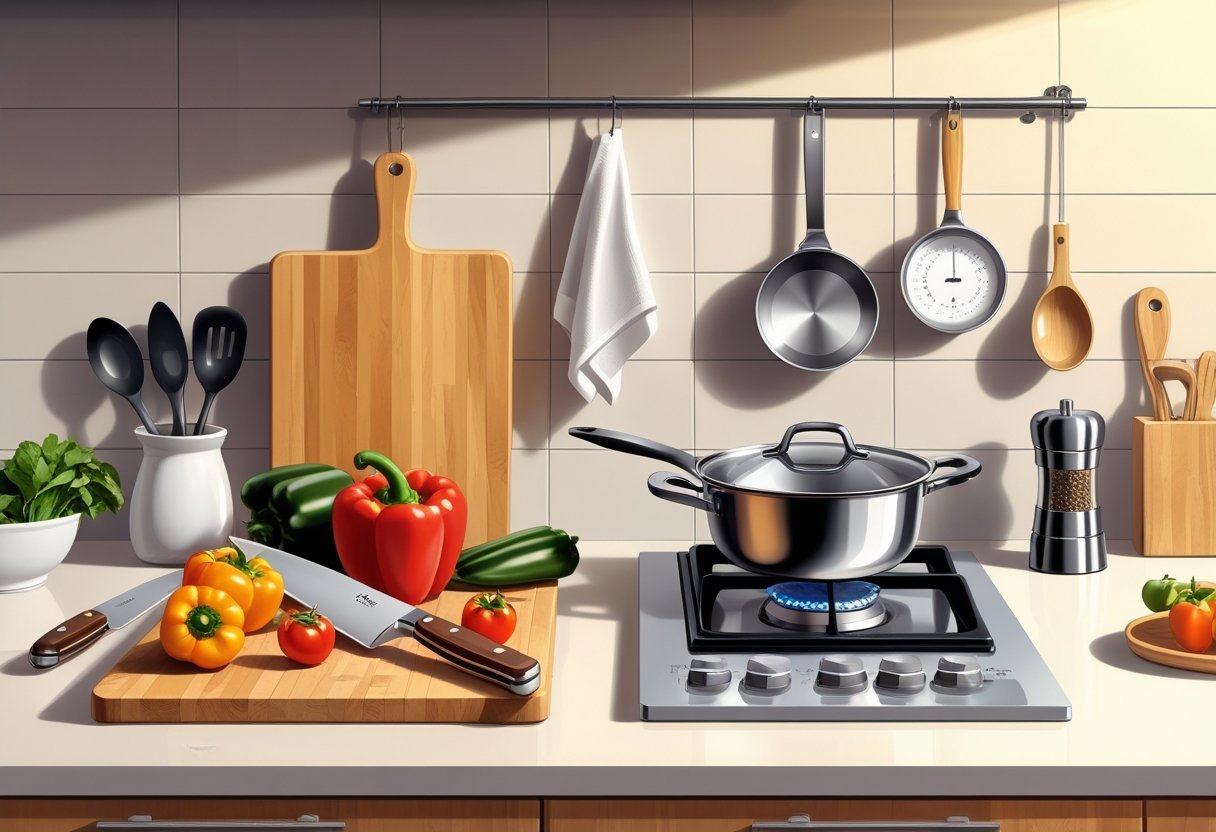
You rely on a few core kitchen tools every day. A sharp knife, sturdy cutting boards, accurate measuring tools, and durable mixing bowls help you prep food faster and cook with better results.
Chef’s Knife and Knife Set
A chef’s knife is the most important tool in your kitchen. You use it to chop vegetables, slice meat, mince herbs, and crush garlic. An 8-inch blade works well for most home cooks because it gives you control without feeling heavy.
Choose a knife made from high-carbon stainless steel. It stays sharp longer and resists rust. The handle should feel secure in your hand and not slip when wet.
A quality knife set can add value, but you do not need a large set. Focus on these basics:
- Chef’s knife
- Paring knife
- Serrated bread knife
Store your knife set in a block, on a magnetic strip, or with blade guards. Hand wash and dry each knife right away to protect the edge.
Cutting Boards
A reliable cutting board protects your counters and keeps your knife sharp. Wood and plastic cutting boards both work well, but they serve different needs.
Use a wooden board for fruits, vegetables, and bread. It is gentle on knife edges and can last for years with proper care. Oil it often to prevent cracks.
Use plastic cutting boards for raw meat, poultry, and fish. You can wash them in the dishwasher, which helps reduce bacteria. Many cooks keep separate cutting boards to avoid cross-contamination.
Choose boards that stay stable on the counter. A damp towel under the board can stop it from sliding while you cut.
Measuring Cups and Spoons
You need accurate measuring cups and measuring spoons to follow recipes and control portion size. Small errors can change the texture and taste of baked goods and sauces.
Keep two types of measuring cups:
- Dry measuring cups for flour, sugar, and grains
- Liquid measuring cups with a spout for water, milk, and oil
Use measuring spoons for small amounts like salt, baking powder, and spices. A full set should include 1 tablespoon down to 1/4 teaspoon.
Choose metal or sturdy plastic tools with clear markings. Make sure the numbers do not fade over time.
Mixing Bowls
You use mixing bowls for prep, marinating, tossing salads, and mixing batter. A set in different sizes gives you more control during cooking.
Stainless steel bowls are light, durable, and easy to clean. Glass bowls work well when you need to see contents or use a microwave. Avoid thin plastic that stains or holds odors.
Look for bowls with wide rims and flat bases. They stay steady while you stir or whisk. Nesting bowls save cabinet space and keep your kitchen essentials organized.
Keep at least three sizes: small for sauces, medium for mixing, and large for dough or salads.
Daily-Use Cookware and Bakeware
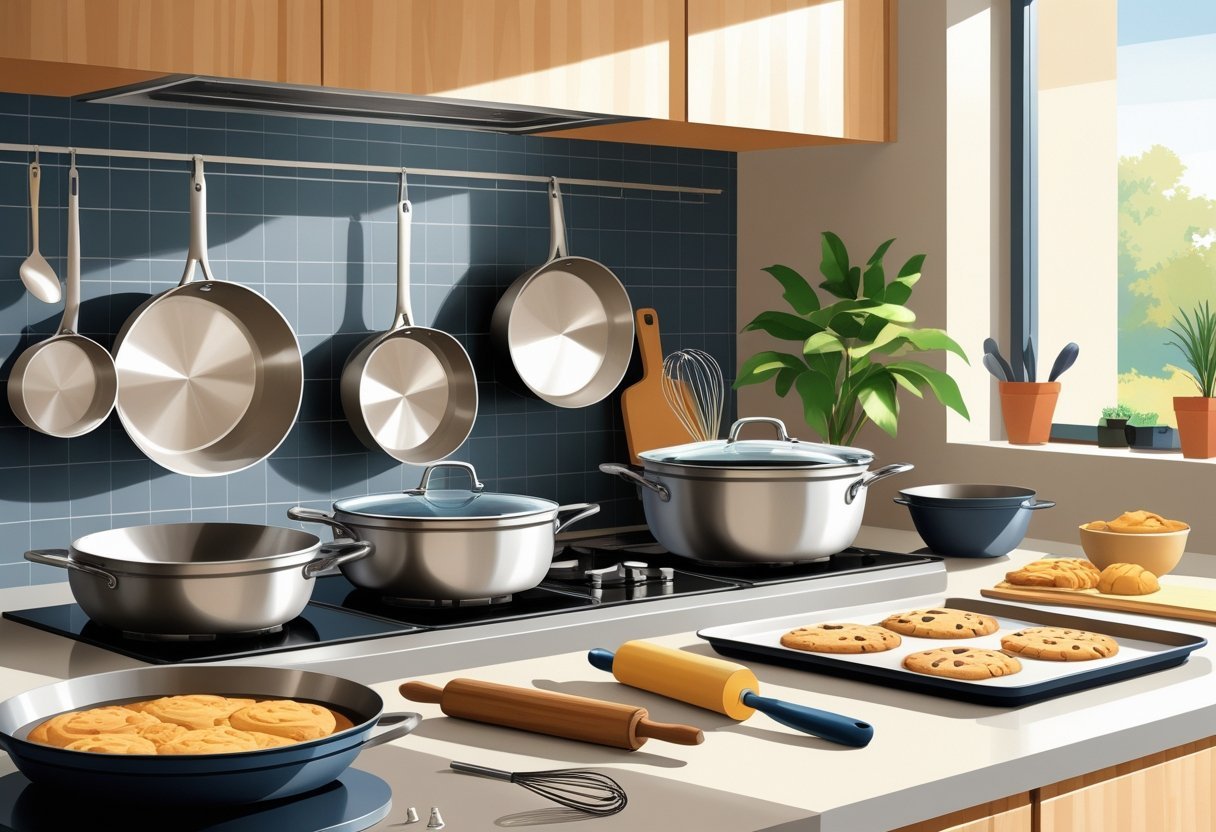
You use a small group of pots and pans more than any other tools in your kitchen. A few well-chosen pieces of cookware and bakeware handle most daily meals, from eggs and rice to soups and baked pasta.
Skillets and Frying Pans
A skillet or frying pan is the most used pan in most homes. You use it for eggs, pancakes, sautéed vegetables, chicken breasts, and quick pan sauces.
Choose a 10- or 12-inch pan for daily cooking. This size fits most burners and gives food enough space to brown instead of steam.
A non-stick pan works best for delicate foods like eggs and fish. It needs less oil and cleans up fast. Replace it when the coating wears down.
A cast iron skillet holds heat well and creates a strong sear on meat. You can also move it from stove to oven. It needs regular drying and light oiling to prevent rust.
If you want more depth for sauces, add a sauté pan with straight sides and a lid. It gives you more control when cooking larger portions.
Saucepans and Stockpots
A saucepan handles small, daily tasks. You use it to cook rice, boil pasta, heat soup, or make oatmeal.
A 2- to 3-quart saucepan with a tight lid covers most needs. Look for a heavy base so heat spreads evenly and does not scorch food.
For larger meals, you need a stockpot. This tall pot holds 6 to 8 quarts or more. You use it for boiling pasta, making broth, cooking chili, or preparing large batches of soup.
Stainless steel works well for both pieces. Many experts prefer clad stainless steel for daily-use cookware because it balances heat control and durability.
You can buy these items in a cookware set, but check that the set includes sizes you will actually use.
Dutch Oven and Casserole Dishes
A Dutch oven is one of the most versatile pieces in your kitchen. You can braise meat, cook stews, bake bread, and fry food in it.
Most Dutch ovens are made from cast iron, often with an enamel coating. The heavy walls hold heat and cook food evenly. A 5- to 6-quart size works well for most families.
A casserole dish is key bakeware for oven meals. You use it for baked pasta, roasted vegetables, and desserts like cobbler.
Choose glass or ceramic for even baking and easy serving. Look for sturdy handles and a size that fits your oven and storage space.
With these core pots and pans, you can cook most daily meals without cluttering your kitchen with rarely used pieces.
Small Kitchen Appliances for Everyday Use
Small kitchen appliances save time and reduce effort during daily cooking. You use them for quick meals, simple prep, and hot drinks without turning on large equipment.
Blender and Food Processor
A blender helps you make smoothies, soups, sauces, and protein shakes in minutes. A countertop model works well for frozen fruit and ice, while an immersion blender lets you blend soups right in the pot. This saves dishes and time.
A food processor handles chopping, slicing, and shredding. You can prep vegetables, grate cheese, or mix dough without using a knife for every step. Many models include different blades and discs, which expand what you can make.
If you bake often, you may also use a stand mixer or hand mixer. A KitchenAid stand mixer can knead bread dough and mix thick batters with less effort. A hand mixer takes up less space and works well for light tasks.
Choose based on your habits:
- Smoothies and soups → Blender or immersion blender
- Chopping and slicing → Food processor
- Baking and dough → Stand mixer or hand mixer
Some people also add a juicer or Instant Pot, but these are useful only if you cook those foods often.
Microwave and Toaster Oven
A microwave is one of the most used kitchen appliances in daily life. You reheat leftovers, steam vegetables, and defrost meat quickly. Look for simple controls, clear power levels, and enough interior space for your plates.
A toaster oven gives you more control than a standard toaster. You can toast bread, bake small dishes, and reheat pizza without drying it out. Many models include bake, broil, and convection settings.
In small kitchens, a toaster oven can reduce the need for a full-size oven during the week. It uses less energy and heats up faster. If you cook for one or two people, this appliance often handles most daily meals.
Keep these points in mind:
- Microwave → Speed and reheating
- Toaster oven → Crisp texture and small-batch baking
Both support fast, simple meals with less cleanup.
Kettle, Coffee Maker, and Toaster
A kettle boils water faster than a stovetop pot. You can use it for tea, coffee, oatmeal, or instant noodles. Electric kettles often include auto shut-off and temperature settings, which improve safety and control.
A coffee maker supports your daily routine. Drip machines brew several cups at once, while single-serve models reduce waste and cleanup. Choose a size that matches how much coffee you drink.
A basic toaster handles bread, bagels, and frozen waffles. Look for adjustable browning controls and wide slots. If you already own a toaster oven, you may not need a separate toaster.
These small appliances take little counter space, yet you use them every day. They support quick breakfasts and hot drinks without extra steps.
Must-Have Cooking Utensils
You use cooking utensils every day to stir, flip, lift, and serve food. The right tools help you work faster, protect your cookware, and handle food safely.
Spatulas and Spoons
You need several types of spatulas and spoons to handle daily tasks. A heat-safe silicone spatula works well for scraping bowls and folding batter. It also protects nonstick pans from scratches.
Keep a thin metal spatula for flipping pancakes, eggs, or burgers in stainless steel or cast iron pans. Its sharp edge slides under food with ease.
Wooden spoons are strong and gentle on cookware. You can use them to stir soups, sauces, and stews without reacting to acidic foods. They also stay cool longer than metal handles.
Add a few serving spoons in solid and slotted styles. Solid spoons lift grains and casseroles, while a slotted spoon drains liquid when you serve vegetables or poached foods.
Whisks and Tongs
A sturdy whisk helps you mix ingredients smoothly. Use a balloon whisk for eggs, cream, and batters. Its wide wires add air and break up lumps.
A smaller whisk works better for sauces and salad dressings. It fits inside small bowls and saucepans. If you cook often, keep more than one size on hand.
Tongs give you control when you turn meat, toss salads, or move hot food. Choose tongs with a locking feature for easy storage. Silicone tips protect nonstick pans, while metal tips handle high heat on grills or in ovens.
Good tongs act like an extra set of hands. They keep your fingers away from heat and splatter.
Peelers, Graters, and Zesters
A sharp vegetable peeler saves time and reduces waste. A swivel peeler follows the shape of carrots, potatoes, and apples. It removes thin strips without taking too much flesh.
Keep at least one box grater in your kitchen. It shreds cheese, slices vegetables, and grates potatoes for hash browns. Use the fine side for hard cheese and the coarse side for cabbage or zucchini.
A narrow microplane or zester handles small, precise jobs. It finely grates citrus zest, garlic, ginger, and nutmeg. This tool adds strong flavor without large pieces in your food.
Replace peelers and graters when blades grow dull. Sharp edges make prep safer and more efficient.
Ladles, Slotted Spoons, and Tongs
A deep ladle lets you portion soups, stews, and sauces with control. Choose one with a long handle to reach the bottom of large pots. A spout on the rim helps you pour without spills.
A sturdy slotted spoon lifts food from boiling water or broth. It drains liquid while holding pasta, dumplings, or vegetables in place.
Keep extra tongs near the stove for tasks like turning roasted vegetables or moving food from pan to plate. Some cooks also keep a potato masher nearby for mashing cooked potatoes or soft vegetables directly in the pot.
These tools help you move, drain, and serve food safely and cleanly.
Food Storage and Kitchen Organization
You keep your kitchen efficient when you store food the right way and give every item a clear home. The right containers, racks, and towels reduce waste, protect food, and make daily cooking easier.
Food Storage Containers
You need food storage containers in a range of sizes to handle leftovers, meal prep, and dry goods. Choose sets with tight lids to prevent leaks and keep air out. Airtight seals help slow spoilage and protect flavor.
Use small containers for sauces and cut fruit. Medium and large containers work best for soups, cooked grains, and family meals. Stackable shapes save space in your fridge and cabinets.
For pantry items like rice, flour, or cereal, clear containers let you see what you have. This helps you avoid buying duplicates and keeps shelves neat. Label each container with the name and date so you track freshness.
Keep aluminum foil and parchment paper in an easy-to-reach drawer. Foil wraps meats and covers baking dishes. Parchment paper lines pans and prevents sticking, which cuts down on cleanup.
Glass Food Storage and Organizers
Glass food storage offers durability and easy cleaning. It does not stain or hold odors the way some plastic can. You can move many glass containers from fridge to microwave or oven, as long as they are labeled oven-safe.
Choose tempered glass with secure lids. Lids should snap or clamp shut to reduce leaks. Replace cracked containers right away to prevent breakage.
Use glass jars to store dry goods on open shelves. Uniform jars create a clean look and help you measure how much food remains. Wide-mouth jars make scooping easier.
Add simple organizers inside cabinets and drawers. Shelf risers double your vertical space. Drawer dividers keep wraps, bags, and small tools in place so you do not waste time searching.
Dish Rack and Kitchen Towels
A sturdy dish rack keeps clean dishes off the counter and allows air to circulate. Choose a rack with slots for plates, a flat area for bowls, and a holder for utensils. A removable drip tray protects your counter from water damage.
Place the rack near the sink to limit drips across the kitchen. Empty and dry the tray often to prevent buildup.
Keep several kitchen towels on hand. Use one for drying dishes, one for drying hands, and one for wiping counters. Wash towels often in hot water to reduce bacteria.
Hang towels on hooks or bars so they dry fully between uses. This simple step keeps your kitchen cleaner and more organized each day.
Daily Cleaning Supplies and Safety Essentials
You rely on a few core items every day to keep your kitchen clean and safe. Strong dish soap, clean sponges, and proper oven mitts protect both your health and your hands.
Dish Soap and Sponges
You use dish soap every day, so choose one that cuts grease and rinses clean. A liquid dish soap with strong grease removal works best for pots, pans, and plates. Keep it next to the sink so you can wash items right after use.
Even if you use a dishwasher, you still need dish soap for hand-wash items. Wash knives, wooden boards, and non-dishwasher-safe pans by hand to prevent damage.
Use at least two types of sponges:
- Soft sponge for plates and glassware
- Scrub sponge for baked-on food
- Optional: bottle brush for narrow cups and water bottles
Replace sponges often. A worn sponge spreads bacteria instead of removing it. Rinse and squeeze them dry after each use. Let them air dry to slow bacterial growth.
Keep dishwasher detergent separate from dish soap. Never put regular dish soap in a dishwasher. It creates excess foam and can damage the machine.
Oven Mitts and Safety Gear
You handle hot pans and trays every day. Thick, heat-resistant oven mitts protect your hands and wrists from burns. Choose mitts that cover part of your forearm, not just your hands.
Silicone mitts resist water and steam. Fabric mitts feel flexible but can absorb heat if wet. Replace mitts that show burn marks, thin spots, or stiff areas.
Store oven mitts near the oven, not across the room. Quick access reduces the risk of grabbing a hot handle with bare hands.
Keep these safety items within reach:
- Oven mitts or heat-resistant gloves
- Dry potholders
- A small fire extinguisher rated for kitchen use
Never use a damp towel as a substitute for mitts. Moisture transfers heat fast and can cause burns. Clean, dry, and sturdy safety gear helps you cook with control and avoid preventable injuries.
Fundamental Pantry Staples for Everyday Meals
You can cook simple, filling meals any day when you keep grains, legumes, core spices, and basic dairy on hand. These items store well, cost less than fresh specialty foods, and support many recipes without extra shopping.
Rice, Pasta, and Beans
You should always keep rice, pasta, and beans in your pantry. They last a long time and form the base of many meals.
White and brown rice both work well. White rice cooks faster and stores longer. Brown rice has more fiber but a shorter shelf life. Use rice for stir-fries, grain bowls, soups, or as a side for meat and vegetables.
Dry pasta is just as useful. Stock simple shapes like spaghetti, penne, or rotini. Pasta pairs with tomato sauce, olive oil, vegetables, or cheese. It cooks in about 10 minutes, which makes it ideal for weeknights.
Keep both canned and dry beans. Black beans, kidney beans, and chickpeas cover most needs. Canned beans save time. Dry beans cost less and store longer. Use beans in chili, salads, tacos, or rice dishes for added protein and fiber.
Basic Spices and Ingredients
A small group of spices and cooking basics can flavor most meals. You do not need a large collection to cook well.
Start with salt and black pepper. Add garlic powder, onion powder, paprika, and dried oregano. These spices work in pasta sauce, soups, roasted vegetables, and meat dishes.
Keep cooking oil, such as olive oil or vegetable oil, on hand. You need it for sautéing, roasting, and making dressings. Store vinegar, such as white or apple cider vinegar, for marinades and simple sauces.
Flour and sugar also matter. Flour helps you thicken sauces or bake simple breads. Sugar balances tomato sauces and supports baking. With these basics, you can build flavor without extra trips to the store.
Dairy and Everyday Additions
You should keep a few dairy staples ready for daily cooking. Milk, butter, and cheese support both savory and sweet dishes.
Milk works in oatmeal, scrambled eggs, pancakes, and sauces. Choose whole, low-fat, or shelf-stable milk based on your needs and storage space.
Butter adds flavor to rice, pasta, and vegetables. It also helps you cook eggs and bake simple desserts. Store it in the fridge, and freeze extra if needed.
Cheese gives meals more protein and flavor. Shredded cheddar, mozzarella, or Parmesan cover most uses. Add cheese to pasta, melt it over beans, or stir it into rice for a quick meal. These items help you turn basic pantry foods into balanced, filling dishes.
Minimalist Kitchen Essentials for Daily Use
A minimalist kitchen focuses on tools you use every day. You rely on fewer items, but each one handles more than one task and earns its space.
Essential Multitasking Tools
Start your kitchen essentials list with tools that cover basic cooking tasks. A chef’s knife handles slicing, chopping, and dicing. Pair it with a sturdy cutting board that protects your counters and keeps food stable.
Choose one large skillet, such as stainless steel or cast iron. It works for sautéing, frying, and even baking simple dishes. Add a medium saucepan for boiling pasta, cooking grains, or heating soups.
Keep mixing bowls that stack inside each other to save space. Measuring cups and spoons are also key kitchen items for daily cooking and baking.
Focus on durable kitchen equipment. Buy fewer pieces, but choose solid materials like wood, steel, or silicone. These minimalist kitchen essentials reduce clutter and support most daily meals without filling every cabinet.
Smart Gadgets and Space-Savers
Limit kitchen gadgets to tools that truly save time or space. A hand blender replaces a full-size blender for soups, sauces, and smoothies while storing in a drawer. A box grater handles shredding cheese, zesting citrus, and slicing vegetables.
Use stackable food storage containers with tight lids. They keep leftovers fresh and organize your fridge. Choose one set that nests neatly to avoid messy cabinets.
A magnetic knife strip frees up counter space and keeps blades within reach. Wall-mounted racks or hooks store utensils and small kitchen equipment without crowding drawers.
When you select space-saving kitchen essentials, check how often you use them. If a gadget serves only one rare task, skip it. Keep tools that support daily cooking and fit easily into your kitchen routine.